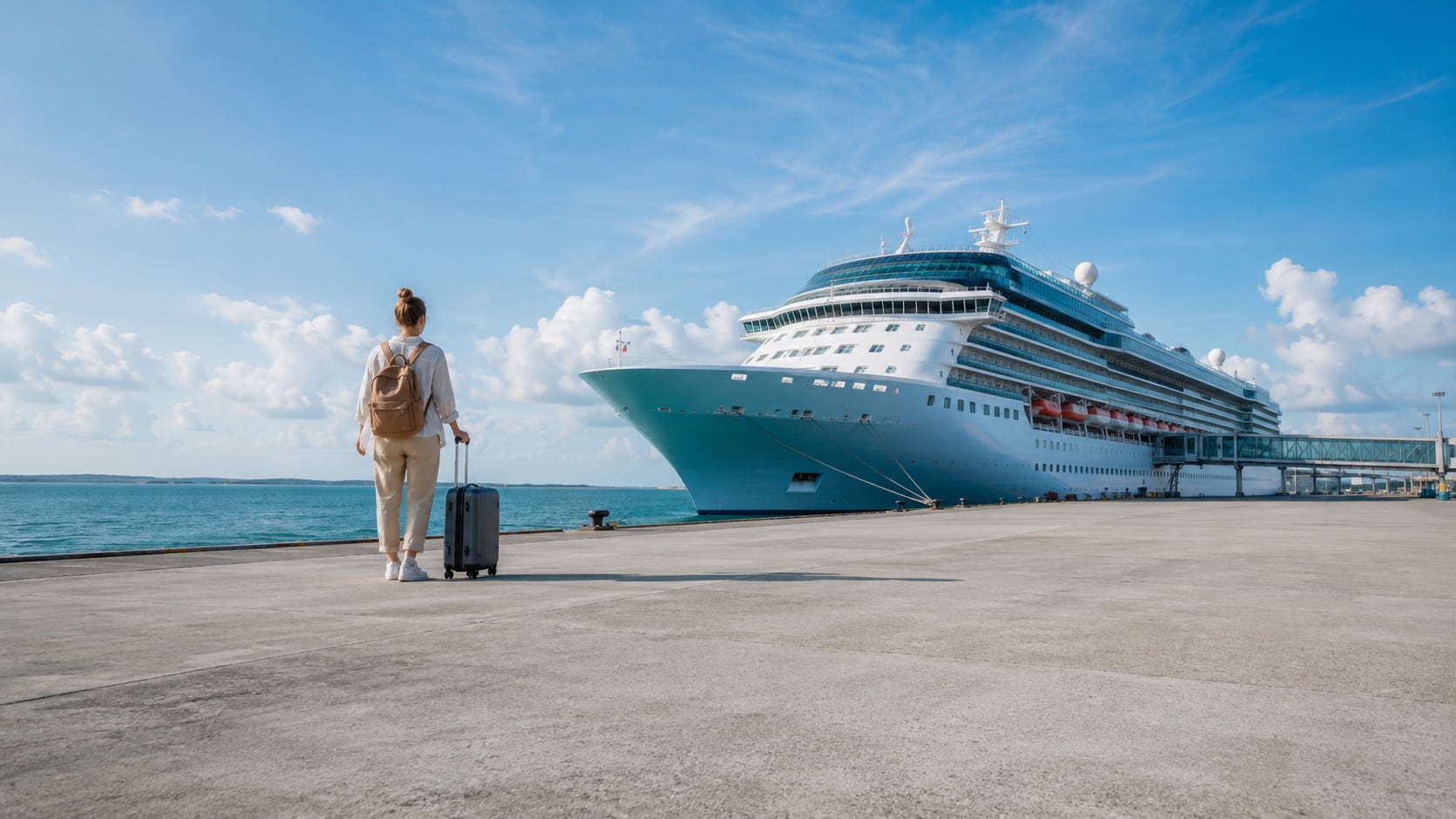
Solo cruising is becoming an increasingly popular way to travel, but if you've never done it before, the idea can feel a bit daunting. Will you feel awkward at dinner? Is it safe? Will you have to pay double for a cabin? What happens on sea days? And will everyone else be travelling in couples or groups?
This beginner's guide covers the main things to think about before booking your first solo cruise, from choosing the right cruise line and cabin to dining alone, staying safe, meeting other people, excursions and what to expect on board.
Whether you're excited or nervous about cruising solo, this guide will help you understand what to expect and how to plan the perfect cruise for you.
Solo Cruises vs Singles Cruises
A solo cruise is simply a cruise where you're travelling by yourself, regardless of your relationship status. You might be single, married, widowed, divorced or travelling without your usual companion. A singles cruise is usually aimed more specifically at single people, and may include hosted social events, group dining or activities designed to help people meet. Some singles cruises have a dating element, while others are more about friendship and companionship.
It's also worth knowing that some hosted singles groups are organised by third-party companies on regular cruise sailings. In that case, the ship itself may not be a "singles cruise" at all. It may simply be an ordinary cruise where a separate group of single travellers has booked space and arranged its own meet-ups, dinners or activities.
Cruise lines and travel agents often use the words "solo," "single" and "singles" quite loosely, so it's always worth checking the details before you book. A page labelled "singles cruises" might simply mean cruises with solo cabins or reduced single supplements, while another could refer to a hosted group sailing for single people. If you're not looking for romance or a very social group experience, read the description carefully and ask questions before booking.
Why Take A Solo Cruise?
One of the biggest benefits of cruising solo is the freedom to do exactly what you want, when you want. You can be as busy or as relaxed as you like, choosing each day based entirely on your own mood and interests. For many solo travellers, that freedom is one of the most enjoyable parts of the experience.
Cruising can also make solo travel feel much easier than other types of holiday. Your accommodation, meals, transport and entertainment are all in one place, so there's less planning to do once you're on board. You can explore different destinations without having to keep packing and unpacking, and there's plenty of opportunity to meet people if you want to, from shared dining tables and excursions to solo traveller meet-ups and onboard activities. At the same time, there's no pressure to be sociable all the time, which makes cruising a lovely balance between independence and connection.
Choosing The Right Solo Cruise
If company during your cruise is important to you, the people on the ship can make more of a difference to your enjoyment of the cruise than the ports. A dream itinerary can still feel flat if you spend the week wishing you had someone to talk to, while a less exciting route can result in an amazing cruise if there are plenty of other solos aboard to spend time with.
Repositioning cruises and off-season cruises can attract large numbers of solo travellers as the prices tend to be lower and there are often extra cabins made available for solo use with a reduced solo supplement. However, repositioning cruises often have a lot of sea days so that's something to bear in mind before booking.
One well-known example of a solos-friendly cruise line is Norwegian Cruise Line, which has made a particular effort to cater for solo travellers on many of its ships, including providing solo cabin options and solo meet-ups. Other cruise lines also offer solo cabins, reduced single supplements or dedicated solos activities, but availability and value vary a lot by ship and sailing.
Finding Other Solo Travellers
A bit of detective work before booking can help you find out how many other solo travellers could be on a cruise you're considering. Facebook has many solo cruise groups, and if you're happy to post, a quick "Is anyone else going solo?" question can tell you a lot.
It can also help to search groups for the specific ship, cruise line or departure date. Cruise Critic roll calls are another useful place to look, as passengers often join the roll call for their sailing before they travel. You may find other solos introducing themselves, arranging meet-ups or chatting about excursions before the cruise begins.
You won't get a guarantee on how many solos are travelling, but you'll often get clues. If several people are already chatting about the same cruise, that's a different prospect from boarding and hoping for the best. This can be especially useful if you're shy, as knowing there may be other solos on board can make the whole booking feel less like a leap into the unknown.
Southampton Or A Fly-Cruise?
For many first-time solo cruisers, sailing from Southampton can feel like the easiest and least stressful option as it means you don't need to worry about navigating flights, transfers or overseas hotels on your own.
The main trade-off is that your choice of destinations will be more limited. Cruises from Southampton tend to focus on places such as the Norwegian fjords, Northern Europe, the British Isles, the Mediterranean and the Canary Islands. Because you're starting in the UK, you may also spend more time at sea before reaching warmer destinations, and the weather, especially on northern itineraries or cruises at the beginning and end of the season, can be unpredictable.
A fly-cruise opens up far more possibilities, including the Caribbean, Alaska, Asia, the Middle East and parts of the Mediterranean where you can start closer to the sunshine. It can also mean fewer sea days and more time in the region you actually want to explore.
If you're comparing possible embarkation ports, the closest airports to cruise ports guide can help you check which journeys look easiest.
Choosing A Cruise Line
Not all cruises feel the same, so it's worth thinking carefully about the cruise line, ship size and likely passenger mix before you book. Some ships have a lively, casual atmosphere with lots of entertainment, family activities and big resort-style facilities, while others feel quieter, more traditional or more adult-focused. As a solo traveller, the "best" ship isn't necessarily the newest or biggest one; it's the one that suits your personality, budget and idea of a good holiday.
Cruise lines also vary in onboard formality and style. Some still have formal nights, dress codes and more traditional dining arrangements, while others are much more casual and flexible. If you like the idea of dressing up, set dining times and getting to know the same table companions each evening, a more traditional cruise line could work well. If you'd rather eat when you feel like it, avoid formalwear and keep your days unstructured, look for a ship with flexible dining and a more relaxed onboard style.
Ship size can make a big difference too. Larger ships often have more restaurants, bars, entertainment, activities and places to wander, which can be great if you like plenty of choice and want to keep busy. Smaller ships can feel calmer and easier to navigate, and you may find it easier to recognise people and make casual conversation, but they might have fewer dining options and less nightlife.
It's also worth considering who else is likely to be on board. A school holiday sailing on a large family-friendly ship will feel very different from a longer itinerary outside the main holiday periods, an adults-only ship or a smaller expedition vessel. None of these options is automatically better or worse for solo travellers, but they'll create very different experiences. Before booking, look at the cruise line's style, the ship's facilities, the itinerary length and the time of year so you can choose a cruise where you're more likely to feel comfortable.
Solo Cabins And Single Supplements
The headline price is often not the price you'll pay as a solo traveller. Cruise prices are usually based on two people sharing, so one person may have to pay a single supplement to occupy the cabin alone.
Solo cabins can help, but they aren't automatically better value. They can be smaller than standard cabins and are often inside cabins with no window. If you're claustrophobic or know you need daylight, the cabin type is worth looking at carefully before assuming a solo cabin is the answer.
Sometimes a standard cabin priced for solo occupancy can be better value than a dedicated solo cabin. It helps to go far enough through the booking process to see the real price for one passenger, then compare the space, location and inclusions before deciding.
Solo Cruise Costs
The cruise fare is only part of the overall cost, so it's worth checking what's included and what isn't before booking. As well as the cabin price and any single supplement, there may be extras such as gratuities or service charges, drinks, Wi-Fi, shore excursions, speciality dining, transfers, pre-cruise hotels and onboard spending. Some fares include more than others, so two cruises with similar headline prices can work out quite differently once everything's added up.
Not all extras are essential, though. You may be happy with the included restaurants rather than paying for speciality dining, or prefer to buy the occasional drink instead of a full drinks package. Wi-Fi, excursions, spa treatments, shops, photos, laundry and other onboard spending can also be managed according to your budget. For solo travellers, the main thing is to look at the total trip cost rather than just the advertised fare, especially if flights, transfers or a hotel before the cruise are involved.
Cruise Travel Insurance
Having travel insurance is especially important on a cruise, as medical treatment, missed departures and unexpected travel changes can be very expensive. Some policies require cruise cover to be added as an extra, so it's worth checking whether cruising is included rather than assuming a standard policy is enough. The policy should also cover every country on the itinerary, as destinations with high medical costs, such as the USA, may need a higher level of cover.
For UK travellers, a valid GHIC or EHIC can be useful on some European itineraries, as it may give access to necessary state healthcare on the same basis as local residents. However, it's not a replacement for travel insurance as it won't cover things like cancellation, missed departures or lost luggage. It also won't cover treatment in the ship's medical centre, private medical treatment or repatriation.
Passports, Visas And Entry Rules
Before booking, it's worth checking the passport, visa and entry requirements for every country on the itinerary, not just the country where the cruise begins. Some destinations have passport validity rules or require online travel authorisations, and requirements can change. Cruise lines may also have their own document rules, so the official destination advice and the cruise line's pre-cruise information should both be checked carefully.
What To Pack For A Cruise
Packing for a solo cruise is much like packing for any other holiday, but the itinerary and weather can make a big difference. Clothes should suit the destinations, season and type of cruise, bearing in mind that conditions can vary during the same trip. On a transatlantic crossing, for example, the weather could change noticeably between departure and arrival, so layers can be more useful than packing only for one climate.
Your main luggage is usually handed over to porters when you arrive at the port and delivered to your cabin later. That means it's important to bring a small carry-on bag with you to store your passport and the check-in documents you'll need for boarding. As it can be a few hours before the main luggage is delivered, it's worth packing medication, valuables, toiletries and perhaps a change of clothes in your hand luggage, especially if you'll have had a long journey and would like to freshen up before your main case arrives.
Cruise lines also have rules about what can and can't be brought on board. Items that could be dangerous or cause a fire risk, such as travel irons, are usually not allowed, so it's worth checking the prohibited items list before packing.
Arriving At The Cruise Port
It's often sensible to arrive in the departure port at least one day before the cruise begins, especially if you're taking a fly-cruise. This gives some breathing space in case of travel delays, and can make the start of the cruise feel much less stressful. Arriving early also gives solo travellers the chance to get their bearings, rest after the journey or enjoy a little sightseeing before embarkation day.
For an easier start to the cruise, a hotel with good transport links to the cruise port can be a good choice. Some cruise lines and travel agents also offer pre-cruise hotel stays and transfer packages, which can be reassuring if arranging transport alone feels daunting. These packages may cost more than booking independently, but they can make the journey from the airport or hotel to the ship feel more straightforward.
Cruise lines usually ask passengers to choose an arrival time when they complete the online check-in for their cruise, and these times help manage the flow of people arriving at the terminal and prevent long queues. Turning up earlier doesn't usually mean boarding sooner; passengers may be asked to wait until their allocated time before they can board.
First Day On Board
Once you're on the ship, cabin availability is usually the first useful thing to find out. If your cabin's ready, you can drop off your carry-on bag and start exploring the ship. If it isn't, heading to the buffet for lunch or a drink can be a nice way to spend time while you wait.
The daily schedule (available either in your cabin or from Guest Services) will show all the activities that are taking place that day and it's worth having a read to see if there's anything you'd be interested in attending.
It's also worth completing any required safety or muster drill as soon as possible, checking the ship's app or daily programme, and noting the time and location of any solo traveller meet-up. If the ship requires bookings for shows, speciality restaurants or activities, embarkation day can be a good time to organise anything you particularly don't want to miss.
Dining Alone On A Cruise
Dinner is the part many first-time solo cruisers worry about most, so it's worth knowing your options before you're standing outside the restaurant on the first night.
Some cruise lines have set dining times, where guests sit at the same table with the same people each evening. This can be a nice way to get to know other passengers over the course of the cruise, especially if you enjoy a more traditional dining experience.
Other cruise lines offer more flexible dining, where passengers can choose when to eat and whether they'd prefer to sit alone or with others. On these ships, solo travellers can usually ask to be seated with other solos or at a table for one. If sitting alone in the middle of a busy dining room feels uncomfortable, it's also possible to ask for a quieter table somewhere less conspicuous. There may be a short wait at busy times, but the restaurant staff will usually provide a buzzer or ask you to come back when your table is ready.
The main dining room also isn't the only option. Anyone who feels more comfortable with something casual can always eat in the buffet instead, where you can serve yourself and choose your own table.
Meeting Other Solo Travellers
Many cruise ships offer a solo travellers' meet-up, often on the first day of the cruise. This can be a good opportunity to meet other people who are also travelling alone before everyone settles into their own routines. For anyone who feels shy or nervous about walking into a group, arriving a little early can make it easier, as there's less pressure than joining once conversations and friendship groups have already started.
There are also more informal ways to meet people on board, such as sitting at the bar and chatting to the bartenders. The staff are usually friendly and used to chatting with passengers, and talking to them can also lead naturally to conversations with other passengers nearby.
Finding Quiet Places On Board
Being on a cruise doesn't mean having to be sociable all the time. Even on busy ships, there are usually quieter places to retreat to, such as lounges, quiet bars, the promenade deck, the library (if the ship has one), the spa or more remote areas away from the main pool. It's also very common to see other passengers sitting alone reading, having a coffee or watching the sea, so spending time by yourself rarely feels as conspicuous as first-time solo cruisers might imagine.
Bored On A Solo Cruise?
Boredom is less likely on a port-heavy cruise because the days tend to fill themselves. You wake up somewhere new, go ashore, come back for dinner, and suddenly the day has gone.
Sea days depend more on the ship and on what you enjoy, but there's usually plenty going on. Depending on the cruise line, the daily programme might include quizzes, talks, dance classes, fitness sessions, craft workshops, cooking demonstrations, wine tastings, games, films, live music, theatre shows, lectures, deck parties or spa events. Larger ships may also have facilities such as pools, gyms, sports courts, cinemas, casinos, waterslides or activity areas, while smaller ships may offer a quieter programme with talks, music, reading spaces and scenic cruising.
If organised activities aren't your thing, that's fine too. Reading a book, listening to a podcast, sitting with a coffee or simply watching the sea can be a lovely way to spend the day. If you meet other solos, you may also find they organise their own informal activities, such as cards, board games or meeting for lunch, which can make sea days feel more sociable without needing to join every official event.
Cruise Wi-Fi And Internet
Accessing the internet at sea can be surprisingly expensive, so it's worth thinking about before you board. Most ships offer Wi-Fi packages, but these can add a lot to the overall cost, especially if you want to stay connected throughout the cruise. Some cruise fares include a limited number of Wi-Fi minutes, but you need to be careful to log out or disconnect when you've finished using them. Otherwise, you could accidentally leave the connection running and use up your remaining minutes without realising.
An eSIM can sometimes be a cheaper alternative to a ship Wi-Fi package. A standard travel eSIM may work well in port or close to land, while a cruise-specific or maritime eSIM may also work at sea, if it supports your ship and route. Before buying one, check the coverage carefully and make sure it works for your cruise ship, not just the countries you'll be visiting.
Normal mobile phone roaming can be used while on a cruise but can be very expensive, especially if you use it while the ship is at sea. Once away from land, phones may connect to the ship's maritime network rather than a normal mobile network, and the charges for calls, texts and data can be much higher than standard roaming rates. To avoid unexpected bills, it's safest to turn off mobile data roaming before the ship leaves port, use flight mode when you don't need a connection, and only use Wi-Fi, an eSIM or mobile data when you're sure what network you're connected to.
Going Ashore On Your Own
Going ashore by yourself can be one of the best parts of a solo cruise, but it's worth thinking about the itinerary before booking. Some ports may feel easy to explore independently, while others might feel more daunting. A useful question to ask yourself is whether you'd be happy visiting each destination on your own if you didn't meet other passengers to go with. If not, organised shore excursions may feel like a safer and more enjoyable option.
A few simple precautions can make solo port days feel much easier. Taking a fully charged phone, a portable charger and a bag that's difficult for thieves to open or snatch can help you feel more prepared. It's also sensible to take the ship's port address or terminal details with you, so you know exactly where to return. Before leaving the ship, make a note of the all-aboard time and plan to be back well before it, to ensure the ship doesn't leave without you. It's also important to check whether the all-aboard time is based on ship's time or local time, as they're not always the same.
Shore Excursions Or DIY?
Ship excursions can be expensive, but they can make solo shore days easier as transport is organised, you'll be with other passengers, and the ship has the tour details if the group is delayed.
Independent tours are often cheaper and may feel less crowded but the main risk is time: if you're late back from an independent trip, the ship doesn't have to wait, so return times and a decent buffer are important.
Staying on board is another option. If you've been to the port before, or you simply want a quieter day, the ship can be a lovely place to be while most passengers are ashore. Spa treatments may be cheaper on port days too, depending on the cruise line.
Solo Cruise Safety
Safety on a solo cruise is mostly about exercising the same judgement you'd use anywhere else: keep your drink with you, don't accept drinks from strangers, and sit where bar staff can see you if you're at a bar alone. If someone makes you uncomfortable, move seats, leave or ask staff for help. The staff are trained to deal with these kinds of situations and can usually help quickly and discreetly.
It can also help to get familiar with the ship's layout early in the cruise, especially the route back to your cabin, the location of Guest Services and the main public areas you're likely to use. Large ships can feel confusing at first, so knowing your way around can make you feel more confident when you're moving around on your own.
It's sensible not to share your cabin number with people you've only just met, and to contact Guest Services or security if anyone makes you feel unsafe. Before you travel, it can also be reassuring to give someone at home your itinerary and arrange when you'll check in with them, particularly on port days or if you'll be exploring independently.
Use the cabin safe for your passport, cards, spare cash and any valuables you don't need with you. For anything accidentally left around the ship, Guest Services is usually the first place to check, as passengers often hand things in when they find them.
Seasickness On A Cruise
Seasickness is a common worry before a first cruise, but many people are surprised by how little movement they feel once they're on board. Modern cruise ships are huge, and their size alone helps reduce the amount of motion passengers notice. Being on a large cruise ship is very different from being on a small sailing boat, where every wave can feel much more obvious.
Most modern cruise ships also have stabilisers, which help reduce rolling from side to side and make the journey feel smoother. When the sea is calm, it's often possible to forget you're moving at all, especially on larger ships. Rough weather can still happen, of course, and some itineraries or seasons may be more prone to rough seas than others, but feeling constant motion isn't usually part of everyday life on a cruise.
Anyone particularly worried about seasickness may feel more comfortable choosing a larger ship, a midship cabin and a lower deck, where movement is usually felt less. It can also be worth packing seasickness tablets, bands or other remedies, just in case.
For more detail on causes, cabin choice and what to pack, see the guide to getting seasick on a cruise.
Disembarkation Day
The last night of a cruise usually involves getting ready for disembarkation the next morning. Most cruise lines ask passengers to pack their main suitcase and leave it outside the cabin the night before, so the crew can collect it and take it to the terminal. If you do this, make sure you keep anything you'll need for the final morning in your hand luggage, including clothes, shoes, toiletries, medication, valuables, travel documents, your phone charger and anything needed for your journey home.
It's also worth checking your onboard account before the end of the cruise. Cruise lines will usually provide a final statement, either delivered to your cabin, available on the ship's app or viewable through the cabin TV. This gives you a chance to check any charges that have been added and query anything unexpected with Guest Services before you leave the ship.
In most cases, the final balance is charged automatically to the payment card registered to your onboard account. If you prefer to settle the bill in cash, this usually needs to be done at Guest Services before disembarkation, and there may be queues on the last evening or final morning. Checking the account early can save a lot of time and make the end of the cruise much less stressful.
Some cruise lines also offer a self-disembarkation or walk-off option, where passengers keep their luggage with them and carry it off the ship themselves. This can be useful if you prefer to stay in control of your case or want to leave earlier, but it's only a good idea if you're comfortable managing your luggage without help, including getting it through the ship, down the gangway, through the terminal and through immigration or customs if needed.
On the final morning, passengers are usually asked to leave their cabins quite early and wait in a public area until their disembarkation group is called. There may still be time for breakfast, but the morning can feel busy, so it helps to check the instructions in the daily programme or cruise line app the night before.
Ready To Cruise Solo?
Cruising alone can feel like a big step before you do it, but the right cruise can make solo travel feel surprisingly easy. With the ship as your base, plenty of ways to meet people, and the freedom to spend your time exactly as you choose, a solo cruise can offer a lovely mix of independence, comfort and connection. The key is choosing a cruise that suits your budget, personality and preferences, rather than assuming every ship or itinerary will offer the same experience.
Share this page
Send it to someone planning a solo cruise.