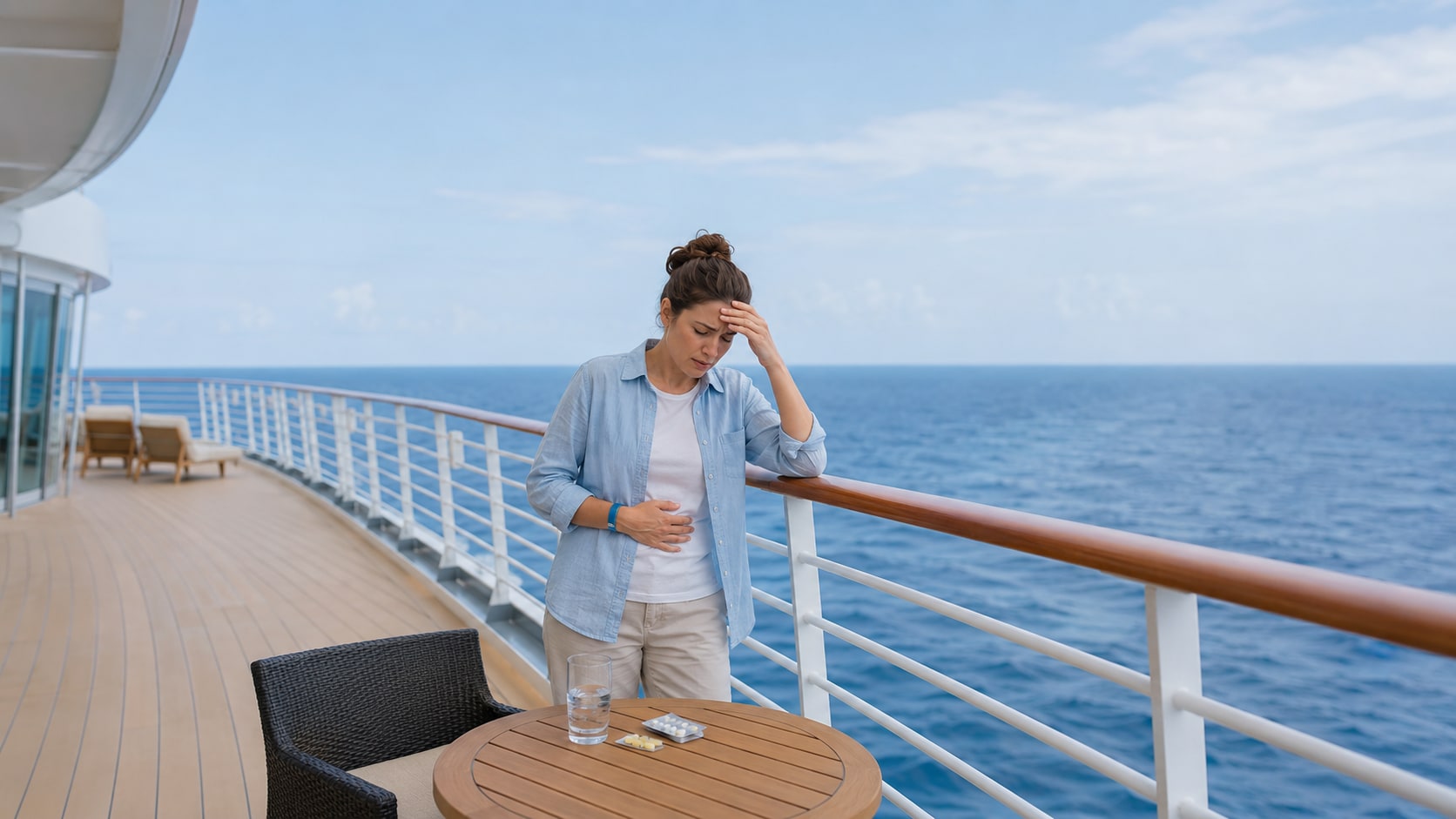
Wondering whether you might experience seasickness on your cruise is a common concern. You might picture yourself trapped in your cabin, missing dinner, or wondering what you'd do if you felt awful in the middle of the ocean, especially if you're cruising alone.
This guide explains why seasickness happens on cruises, when it's most likely, how to reduce the chances of it affecting you, and what to do if you start feeling unwell onboard.
What Causes Seasickness on a Cruise Ship?
Seasickness happens when your brain receives mixed messages about movement. Deep inside your inner ear is the vestibular system, which helps control balance by sensing motion and changes in position. When the ship moves with the swell, your inner ear can detect that movement, but your eyes may not if they're looking at something that appears still.
Your muscles and joints may also be sending another set of signals about how your body is positioned. Because these messages don't all match, the brain struggles to make sense of what's happening, and that sensory conflict can trigger the familiar symptoms of motion sickness, such as nausea, dizziness, sweating, headache, tiredness, and sometimes vomiting.
Are Cruise Ships Better Than Small Boats for Seasickness?
Generally, yes, for three main reasons:
- Size: Large cruise ships are heavy and less easily tossed around than small boats.
- Stabilisers: Many modern ships have stabilisers that help reduce side-to-side rolling.
- Route planning: Cruise lines monitor weather and sea conditions and alter course where possible.
Who Is More Likely to Get Seasick on a Cruise?
The clearest sign that someone's likely to get seasick on a cruise is a history of motion sickness. If travelling as a passenger in a car, flying or going on fairground rides has made you feel nauseous before, you're more likely to react to a ship's movement too. People who experience migraines, vertigo or other inner-ear and balance disorders are also more susceptible.
Younger travellers also tend to be more prone to seasickness than older travellers, while women report it somewhat more often than men. Your risk can also increase temporarily when you're short of sleep, drinking alcohol, smoking, reading or looking at your phone while the ship is moving.
Even someone with none of these risk factors can get seasick on a cruise if the seas are rough, particularly near the ship's bow where movement is stronger. Thankfully, however, many people gradually adjust as the cruise continues and they begin to find their sea legs.
When Is Seasickness Most Likely on a Cruise?
Seasickness is most likely when the ship encounters rough, rolling or unpredictable seas, as stronger movement creates a greater mismatch between what your inner ear feels and what your eyes see. You may therefore notice it more during windy or stormy weather, on exposed stretches of open ocean and when a persistent swell causes the ship to pitch or roll. It can also be more of a problem near the beginning of a cruise, before your body has started adjusting to the movement.
What you're doing at the time can make a difference too. Seasickness is more likely when you're somewhere without a clear view of the horizon, particularly if you're reading, using your phone or concentrating on another close-up task while the ship is moving.
How to Reduce the Chance of Seasickness Before You Cruise
One of the most useful things you can do before your cruise is choose your cabin carefully. Look for one close to the centre of the ship on a lower or middle deck, as this is generally a steadier position than the highest decks or the far ends of the ship. An ocean-view cabin can be a good choice because it provides a window without placing you too high, while a well-positioned balcony cabin gives you easy access to fresh air and a view outside.
Your choice of itinerary makes a difference too, so look for a port-intensive cruise with short distances between stops and as little continuous open-ocean sailing as possible. Coastal routes and sheltered waters may be better than an ocean crossing or an itinerary with several consecutive sea days.
It's also worth preparing a small seasickness kit before leaving home. Ask a pharmacist which travel-sickness tablets or patches are suitable for you, buy enough for the entire cruise and read the instructions beforehand, as some remedies need to be used before symptoms begin. Acupressure wristbands are easy to pack as an additional precaution, although they don't work for everyone.
What to Do If You Start Feeling Seasick Onboard
Seasickness is much easier to manage when it's caught early, before the nausea has had time to take hold. The first signs may be quite subtle, such as feeling slightly warm, queasy or suddenly tired. At that point, moving to a calm outdoor area can be helpful, especially somewhere sheltered where the horizon is easy to see. Some parts of the ship also move less than others, so a lower deck near the middle may feel considerably better than somewhere at the top of the ship or near either end.
Water taken in small sips can help an unsettled stomach and some people find that ginger, peppermint, green apple or another simple snack takes the edge off the nausea. Anyone travelling alone may also feel more reassured after letting their cabin attendant know they're unwell, as the attendant may be able to check in later to make sure you're ok.
If symptoms keep getting worse, make it difficult to drink, or feel unusual in any way, it may be worth contacting Guest Services or the medical team for advice. The ship's medical centre can be very expensive though, so checking the price before attending is sensible when the situation isn't urgent. Travel insurance usually works on a reimbursement basis, which means the bill will need to be paid onboard first and claimed back after the cruise.
A Little Preparation Can Make a Big Difference
Seasickness is difficult to predict with certainty, but it doesn't have to overshadow your cruise. Choosing a mid-ship cabin, packing suitable remedies and knowing what to do if you begin to feel unwell can make the prospect much less daunting and allow you to focus on enjoying your cruise.
Share this page
Send it to someone planning a solo cruise.